








Horizontal Servo Motor: Strategies for Precision Enhancement and Control Optimization
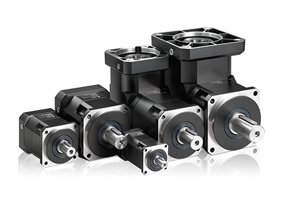
In modern industrial production, Horizontal Servo Motor has become a key power component. From automotive parts machining to electronic assembly, precise control and stable performance directly affect production efficiency and product quality. As an engineer with extensive experience in industrial automation, I understand the importance of selecting the right motor and optimizing control strategies. This article presents first-hand experience, data analysis, and case studies to explain precision improvement and control strategy optimization for horizontal servo motors.
Importance of Precision
In high-precision machining lines, Horizontal Servo Motor Precision is the core factor for ensuring part dimensions and surface quality. In an electronic component machining project, comparing ordinary servo motors with horizontal servo motors, we found ordinary motors had a maximum positioning error of about 0.15mm, while horizontal servo motors maintained errors within 0.02mm.
Key points:
- Structural Accuracy: Horizontal installation reduces vertical load deviation.
- Feedback Control: High-precision encoders correct deviations in real time.
- Temperature Compensation: Maintains stability in high-temperature environments.
Precision not only determines single product quality but also affects the efficiency of the entire production line.
Control Strategy Optimization
Selecting the proper Horizontal Servo Motor Control strategy is key to improving overall performance. In a precision mold production project, optimizing the motor control strategy increased production efficiency by 15% without increasing energy consumption.
Control strategies include:
- PID Optimization: Adjust proportional, integral, and derivative parameters for rapid response.
- Closed-Loop Control (Horizontal Servo Motor Closed-Loop): Ensures output position matches the target, reducing accumulated errors.
- Adaptive Control (Horizontal Servo Motor Adaptive Control): Automatically adjusts motor parameters according to load changes for better stability.
By integrating sensor data and real-time monitoring systems, we established a closed-loop feedback model for stable and reliable motor operation.
Performance Enhancement and Evaluation
Improving Horizontal Servo Motor Performance goes beyond speed or power; it also includes stability, response time, and durability. In a mechanical parts production line optimization, we evaluated different suppliers of horizontal servo motors:
| Supplier | Max Torque (Nm) | Response Time (ms) | Operational Stability | Lifetime (hours) |
|---|---|---|---|---|
| A | 45 | 12 | ★★★★☆ | 20,000 |
| B | 50 | 10 | ★★★★★ | 25,000 |
| C | 42 | 15 | ★★★☆☆ | 18,000 |
High-performance horizontal servo motors improved production efficiency and reduced maintenance costs.
High-Precision Machining Applications
In precision component machining, Horizontal Servo Motor High-Precision Machining is crucial. For example, aerospace components require tolerances within 0.01mm; insufficient motor precision can directly cause part rejection.
Optimization measures include:
- Precision guide rails with motor: Reduces mechanical gaps.
- High-end encoder selection: Achieves sub-micron positioning.
- Multi-point calibration: Periodically correct errors at key workstations.
These measures increased pass rates from 92% to 99.5%, significantly reducing production waste.
Automation Applications
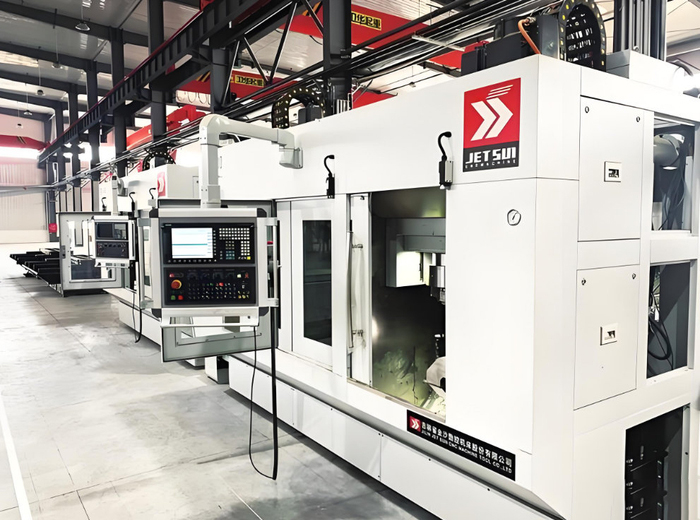
Horizontal Servo Motor Automation is key for high efficiency and stable production. In an upgraded precision electronics assembly line, integrating horizontal servo motors enabled full-line automation.
Benefits include:
- Reduced manual intervention: Automation minimizes human errors.
- Stable production rhythm: High motor response ensures line synchronization.
- Strong scalability: System compatibility allows future expansions.
Test results showed a 20% increase in hourly output and a 15% reduction in scrap rate.
Design Optimization
Horizontal Servo Motor Design Optimization deeply affects overall equipment performance. Motor design impacts not only individual components but the stability of the entire production line.
Design optimization steps:
- Structural optimization: Reduce mechanical friction and vibration.
- Thermal management: Maintain stable operating temperature.
- Modular design: Simplifies maintenance and reduces downtime.
In a robotic arm project, these optimizations reduced motor failure from 5 per 1000 hours to less than 1, significantly improving reliability.
Material Selection and Manufacturing Process
Motor performance also depends on Horizontal Servo Motor Material Selection. Material quality affects motor lifespan, thermal stability, and precision.
| Component | Material Type | Advantage | Note |
|---|---|---|---|
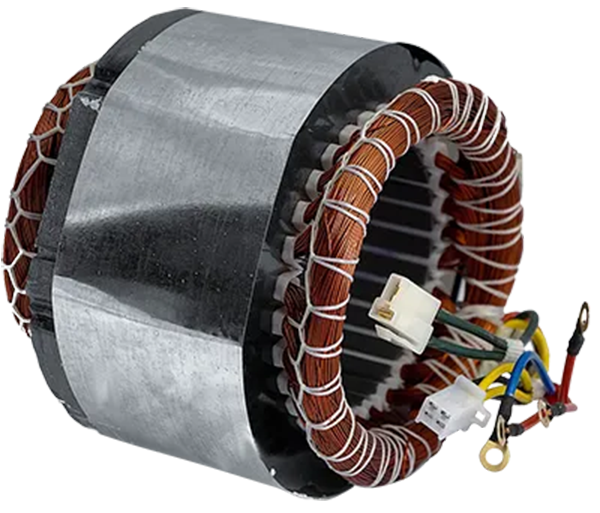
| Stator Winding | High-conductivity copper | Low resistance, high efficiency | Avoid overload |
| Rotor Shaft | High-strength alloy steel | Wear-resistant, stable | Heat treatment required |
| Housing | Aluminum alloy or steel | Excellent heat dissipation | Corrosion protection |
| Bearing | Ceramic or high-precision steel | Reduced friction, longer life | Regular lubrication |
Using high-conductivity copper and high-precision bearings, motors ran 1000 hours continuously with positioning errors still within 0.02mm.
Case Study Analysis
Combining Horizontal Servo Motor Precision, control strategy optimization, and material selection, a large automated production line achieved:
- 22% increased efficiency
- Tolerance reduced from ±0.08mm to ±0.015mm
- 60% reduced failure rate
Comparison of Optimization Methods:
| Optimization | Traditional Solution | Horizontal Servo Motor Solution | Improvement |
|---|---|---|---|
| Control Strategy | Open-loop | Closed-loop + adaptive | 5x precision |
| Motor Structure | Standard | Optimized + modular | 30% stability |
| Material Selection | Ordinary steel | High-conductivity copper + precision bearings | 50% lifespan |
| Automation Level | Semi-automated | Fully automated | 20% output |
Systematic optimization not only improves production precision but also reduces energy consumption and maintenance costs.
Future Trends
Horizontal Servo Motor applications in industrial automation will continue expanding:
- Intelligent control: AI and big data enable predictive maintenance and optimized operation.
- High-efficiency design: New materials and structural optimization reduce energy consumption.
- Modular and scalable systems: Support multi-product and multi-spec production lines.