







How Six-Axis Industrial Robots Are Transforming Industrial Automation and Smart Manufacturing
How Six-Axis Industrial Robots Are Accelerating Industrial Automation in Modern Manufacturing
In recent years, while supporting several factory automation and production line upgrade projects, I have noticed a clear shift in how manufacturers view automation. It is no longer treated simply as a way to reduce headcount. More often, it is seen as a practical tool to restructure production processes, stabilize quality, and build long-term operational competitiveness.
In many of these projects, six-axis industrial robots have gradually become one of the most important elements on the shop floor. What started as support equipment is now frequently positioned as a core execution unit within automated and semi-intelligent production systems.
From hands-on project experience, the real success of automation is not decided by whether robots are installed, but by whether the right robot type is selected and whether the production process and management system are adjusted accordingly.
With rising labor costs, tighter delivery schedules, and increasing pressure on quality consistency, more manufacturers are combining six-axis robots with broader industrial automation strategies. In practice, this combination is proving to be one of the most effective ways to improve both efficiency and production flexibility.
Practical Reasons Manufacturers Are Choosing Six-Axis Industrial Robots
When discussing automation plans with plant managers and operations teams, the same challenges come up repeatedly:
- Skilled labor is harder to recruit and retain
- Product models change more frequently than before
- Manual operations introduce variability in quality
- Production schedules are becoming less forgiving
Under these conditions, six-axis industrial robots are often selected because they can handle complex motions and multiple tasks within a single work cell. Compared with simpler robot structures, they are better suited for applications that require flexible orientation, multiple approach angles, and integration of several processes.
In real projects, this flexibility often becomes a key advantage when customers want to reduce dependence on dedicated machines and move toward more adaptable production layouts.
Flexibility on the Production Line: A Real Operational Benefit
In several automotive parts and metal processing projects, we found that traditional special-purpose machines delivered good cycle times but limited flexibility. Once product specifications changed, the cost and time required for retooling became a serious burden.
After introducing six-axis industrial robots, the situation improved noticeably:
- Different product variants could be handled through program changes
- Tooling became more standardized
- Line changeover time was reduced
In one automotive components factory, average changeover time was reduced from around 40–60 minutes to less than 20 minutes. This allowed the customer to handle smaller batch orders more efficiently while keeping line utilization at a healthy level.
From an operational point of view, this kind of flexibility often has a bigger long-term impact than small gains in pure cycle time.
Quality Stability: Where Robots Often Deliver the Biggest Return
In electronics and precision assembly, the most visible improvement after automation is usually not speed, but consistency.
In one project, we compared performance before and after introducing six-axis robots combined with a vision system:
- Before automation (mainly manual):
- Yield rate around 96.2%
- Results strongly dependent on operator skill
- After automation:
- Yield rate around 99.1%
- Much more stable from shift to shift
For management teams, this kind of stability is often more valuable than headline productivity numbers. It reduces rework, lowers customer complaints, and makes planning more predictable.
A Practical Approach to Implementing Six-Axis Robots
Based on experience, automation works best when it is introduced as a phased improvement project rather than a single large purchase decision.
A more practical approach usually includes:
- Reviewing existing processes to identify true bottlenecks
- Standardizing work methods before automating them
- Integrating robots with vision systems and line controls
- Connecting key equipment to production and quality data systems
This step-by-step method makes it easier to control risk and allows both engineering and operations teams to adapt gradually.
Typical Applications Across Industries
In recent projects and market observations, six-axis industrial robots are commonly used in the following areas:
| Industry | Common Uses | Main Operational Benefit |
|---|---|---|
| Automotive | Welding, assembly, dispensing | Stable takt time and consistency |
| Electronics | Precision assembly, inspection | Higher yield and repeatability |
| Metal processing | Machine tending, grinding | Lower labor intensity |
| New energy | Battery module assembly | Process stability and traceability |
| Food processing | Packaging, sorting | Standardization and hygiene |
Across these sectors, the trend is clear: six-axis robots are moving beyond isolated workstations and becoming part of fully automated production lines.
ROI in Real Projects
From a business perspective, return on investment is always a key question. In most cases, ROI depends on local labor costs, shift patterns, and how well the line is utilized.
In one electronics manufacturing project:
- Total automation investment: approx. RMB 850,000
- Annual labor savings: approx. RMB 420,000
- Additional benefit from yield improvement: approx. RMB 100,000–150,000
- Estimated payback period: 18–22 months
For many manufacturers, this type of payback timeline makes automation a financially reasonable decision, especially when long-term stability is considered.
Moving Toward Intelligent Manufacturing
Today, six-axis industrial robots are increasingly connected with other digital technologies, including:
- Machine vision for inspection and positioning
- Data systems for production and quality tracking
- Equipment monitoring for maintenance and energy management
- MES platforms for traceability and reporting
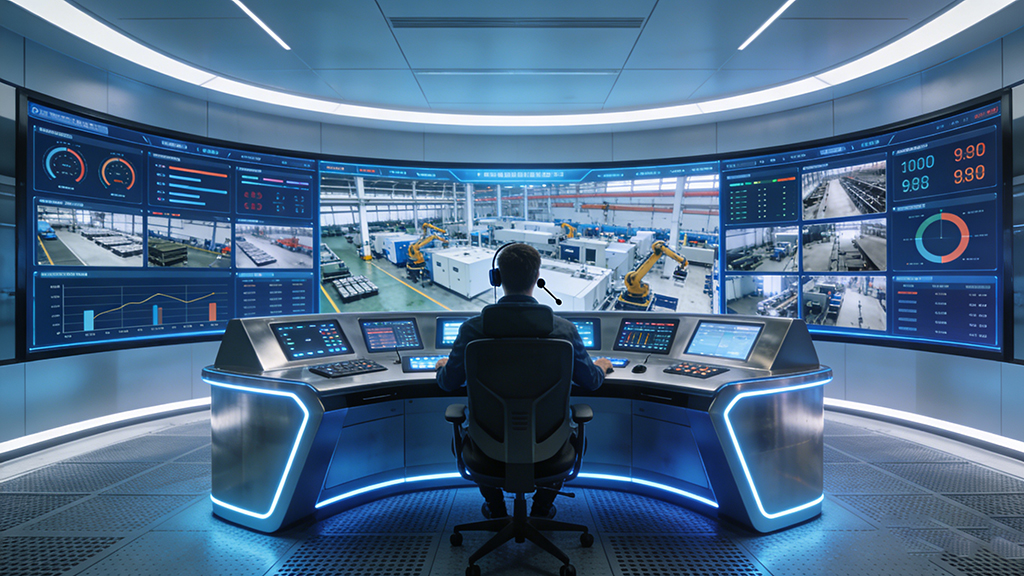
In a recent new energy project, integrating robots with MES allowed the customer to record key process parameters automatically and trace quality issues back to specific operations. This kind of integration marks a step beyond basic automation and toward a more data-driven manufacturing environment.
Conclusion: The Broader Value of Six-Axis Industrial Robots
From both industry trends and real project experience, it is clear that six-axis industrial robots deliver value well beyond simple labor replacement. Their main strengths include:
- More stable production rhythm
- Reduced dependence on manual operations
- Improved product consistency
- Better support for flexible manufacturing
- A stronger foundation for future digitalization
In practice, six-axis industrial robots are not just machines. They are tools for reshaping how factories operate and for building a more resilient production system over the long term.