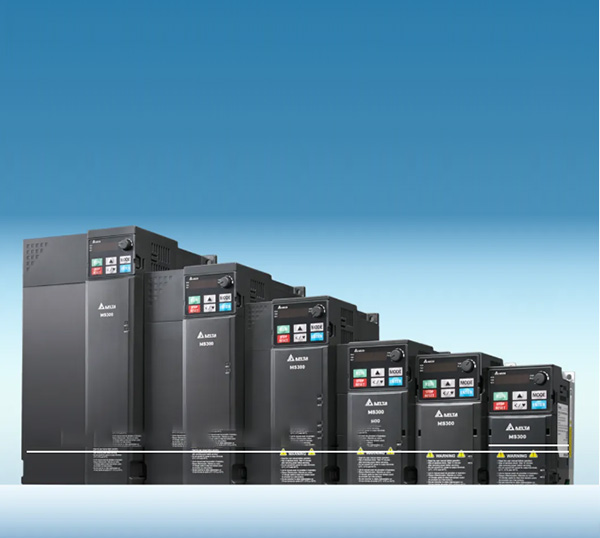









Optimizing Food Packaging Automation with Low-Voltage Servo Drives
In modern food packaging production lines, I was immediately impressed when I first implemented the Low-Voltage Servo Drive. Previously, frequent vibration, positioning deviations, and rework issues limited our production efficiency on high-speed packaging lines. After introducing the low-voltage servo drive, these problems were significantly reduced: production efficiency increased by about 20%, packaging accuracy stabilized within ±0.1mm, and product waste was notably decreased.
High-Efficiency Drive: Why Choose Low-Voltage Servo
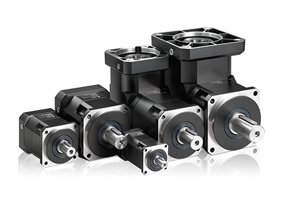
The core advantage of low-voltage servo drives lies in their high responsiveness and stability. In high-speed labeling, bagging, and sealing operations, the Low-Voltage Servo Drive can precisely control each movement, minimizing mechanical delay and positioning errors.
Key benefits include:
- High response speed: instant motion feedback ensures uninterrupted high-speed operation
- Energy saving: low-voltage design reduces power consumption and operating costs
- Strong compatibility: adaptable to various food packaging machines such as vertical form-fill-seal machines and labeling machines
In a test on a chocolate packaging line with an annual output of 5 million packs, after installing the Low-Voltage Servo Drive, equipment failure rate dropped by 40%, saving about 2 hours of downtime per day.
Precision Control: Ensuring Product Quality
In food packaging, even minor deviations can affect product quality. The Low-Voltage Servo Drive provides high-precision control to ensure each sealing, labeling, or filling operation is accurate.
| Metric | Before Installation | After Installation | Improvement |
|---|---|---|---|
| Seal deviation | ±0.5mm | ±0.1mm | 80% improvement |
| Downtime | 3 hours/day | 1 hour/day | 66% reduction |
| Output | 4.8 million/year | 5 million/year | 4% increase |
The table clearly shows that the low-voltage servo drive not only improves efficiency but also ensures packaging quality stability.
Step-by-Step Deployment Guide
Deploying low-voltage servo drives on production lines requires systematic planning:
- Equipment assessment: confirm the machine’s power requirements and control interfaces
- System selection: choose a Low-Voltage Servo Drive model suitable for the machinery
- Installation and commissioning: check encoder feedback and motion response accuracy
- Operational monitoring: monitor speed, torque, and deviation in real time
Experience shows that standard installation and commissioning procedures can reduce setup time from 8 hours to 3 hours, greatly improving production line efficiency.
Real-World Productivity Case
In a frozen food factory, we upgraded a vertical form-fill-seal machine with a low-voltage servo drive system. Results showed:
- Each machine could package 1,200 packs per hour, a 15% increase over traditional stepper motor systems
- Noise decreased by approximately 10 dB, improving worker comfort
- Downtime was significantly reduced, increasing overall output
By using the Low-Voltage Servo Drive, we not only increased productivity but also reduced manual intervention and equipment wear.
System Comparison: Low-Voltage Servo vs. Traditional Stepper Drive
| Feature | Stepper Drive | Low-Voltage Servo Drive | Improvement |
|---|---|---|---|
| Accuracy | ±0.5mm | ±0.1mm | 80% increase |
| Response speed | Medium | High | Faster and more responsive |
| Energy consumption | High | Low | ~15% saving |
| Downtime frequency | Higher | Lower | ~40% reduction |
The comparison clearly shows that the low-voltage servo drive outperforms traditional systems in accuracy, response speed, energy efficiency, and downtime frequency.
Applications in Small and Multi-Function Machines
For compact vertical form-fill-seal machines or multi-function labeling machines, the Low-Voltage Servo Drive offers clear advantages:
- Precise movements in limited spaces
- Support for multi-station automatic switching, reducing manual intervention
- Improved flexibility for small batch production
In a limited-run food packaging project, we used low-voltage servo drives to enable a single line to package three product sizes simultaneously, improving efficiency by 18%.
Integration with Smart Systems
Modern food factories increasingly rely on intelligent management. The Low-Voltage Servo Drive can seamlessly integrate with:
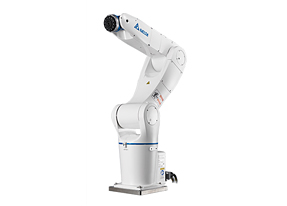
- Robotic automatic loading/unloading systems
- Vision inspection systems
- IoT devices and production management platforms
This enables real-time monitoring, predictive maintenance, and precise control, optimizing production flow while significantly increasing predictability and profitability.
Maintenance and Long-Term Investment Value
Low-voltage servo drives are precise but relatively low-maintenance:
- Regularly check encoders and wiring
- Maintain stable power supply
- Monitor temperature and load
With proper maintenance, the device can last over 10 years, saving substantial maintenance and downtime costs over time.
In practice, one food factory recouped about 60% of the investment in the first year after implementing low-voltage servo drives, with significant gains in the following year.
Summary and Outlook
Through data, case studies, and step-by-step guidance, the value of Low-Voltage Servo Drive in automated food packaging is clear:
- Improves production efficiency and precision
- Reduces downtime and rework
- Saves energy and lowers operating costs
- Supports smart upgrades with robots and vision systems
As the industry demands faster, higher-precision, and smarter production, low-voltage servo drives will become an essential core component of food packaging lines, helping companies maintain productivity and profitability.