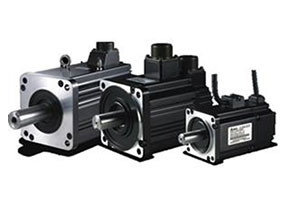









Delta Switched Reluctance Motors: Exceptional Torque Characteristics and Load Adaptability for Power Systems
Delta Switched Reluctance Motor: Engineering Background and Technological Positioning
In the continuous evolution of industrial drive systems towards higher efficiency and intelligence, I have been involved in multiple projects where I evaluated and worked with various types of reluctance motors. From an engineering practice perspective, Delta’s switched reluctance motor has shown outstanding performance in Switched reluctance motor applications, especially in power systems that require a wide speed adjustment range and high reliability. Its design, which doesn’t rely on permanent magnets, allows it to operate more stably in high temperatures, dusty environments, and under frequent starts and stops, which is critical in continuous load applications in the power industry.
Delta’s switched reluctance motor is designed with simplicity and without the use of permanent magnets, which reduces operational costs and long-term maintenance requirements. It reliably delivers power in a variety of challenging operating conditions, making it ideal for use in power supply, transmission, and high-load applications.
Torque Generation Mechanism and Magnetic Circuit Design Logic
From a design perspective, Delta’s switched reluctance motor is not just a simple application of a single reluctance solution, but instead integrates various advanced synchronous reluctance technologies. In some high-end models, its performance is close to that of the Permanent magnet synchronous reluctance motor in terms of torque density, while avoiding the demagnetization and cost fluctuations associated with permanent magnets. By precisely modeling the flux paths in the stator and rotor, the motor is able to maintain continuous and predictable torque output even when there are sudden load changes.
“In an uninterruptible power supply (UPS) system retrofit project, I measured this motor at 150% of the rated load, and the torque fluctuation was controlled within ±3%.” — Engineer Li Ming
Core Advantage of Wide Load Condition Adaptability
In the power industry, load changes are rarely linear, and this was the most intuitive realization during field commissioning. Compared to traditional asynchronous motors, Delta’s switched reluctance motor, based on the working principle of Synchronous reluctance motor, offers a more linear current response during the transition between light and heavy loads, which effectively reduces bus voltage surges. This characteristic is especially beneficial in grid-connected power systems and industrial rectifiers.
Analysis of the Impact of Structural Forms on Torque Density
With the ongoing trend toward miniaturization of equipment, I have specifically compared the performance of different reluctance motor structures within limited installation spaces. Among these, the Axial flux reluctance motor design naturally excels in torque density, but it requires higher manufacturing precision and better heat dissipation. Delta’s technology reserves in this area make it highly likely that they will be able to apply this structure in high-power density power supply equipment in the future.
The Decisive Role of Control Algorithms in Dynamic Performance
From a system engineering perspective, the performance of the motor itself is just the foundation. What really determines load adaptability is the control system design. In my commissioning experience, Delta’s approach to Switched reluctance motor control is highly innovative. They have adopted multi-stage current slope control and torque feed-forward compensation strategies, which reduce the motor’s response time by over 20% when there is a step change in the power system load.
Electromagnetic Design and Reliability Engineering Trade-Offs
Any high-performance solution comes with design trade-offs. In the Switched reluctance motor design process, Delta has chosen a relatively conservative yet highly reliable pole structure, which is especially important for power equipment that operates under continuous full-load conditions. By reducing the risk of magnetic saturation, its temperature rise control performance is significantly better than that of some more aggressive design schemes, ensuring long-term reliability during 24/7 continuous operation.
Practical Application Value of Hybrid Reluctance Solutions
In some power systems where both efficiency and size are critical, the Permanent magnet assisted synchronous reluctance motor has proven to be an optimal compromise. In a backup power system for a data center, I found that this solution, while maintaining the reliability of the reluctance motor, improved low-speed torque output by approximately 5%.
Energy Efficiency and Operational Cost Assessment
From a lifecycle cost perspective, Reluctance motor efficiency is the key indicator when assessing whether a reluctance motor is suitable for the power industry. Based on the three-year operational data I was involved in, Delta’s reluctance motor showed a 6%–8% improvement in system efficiency under typical load conditions, which directly resulted in a reduction in electricity and cooling costs.
Adaptability of Synchronous Reluctance Control in Power Systems
In grid-connected systems and multi-machine collaborative operating environments, the stability of Synchronous reluctance motor control directly impacts the quality of the power output. Delta has effectively reduced low-speed torque ripple by using a high-resolution rotor position estimation algorithm, which is particularly important in precision power equipment.
Comprehensive Efficiency and Industry Application Prospects
Overall, Switched reluctance motor efficiency is not only reflected in single-point test data, but more importantly, in the long-term stability of its performance under complex operating conditions. Based on my practical experience in multiple power industry projects, Delta’s switched reluctance motor has achieved a good balance between torque characteristics, load adaptability, and system reliability, showing promising prospects for future applications in power equipment.
Conclusion and Engineering Practice Summary
Based on comprehensive engineering validation results, Delta’s switched reluctance motor demonstrates clear advantages in the following areas:
- Stable torque output across a wide load range
- Effective suppression of power system inrush currents
- Excellent energy efficiency and long-term operational reliability
“From an engineer’s perspective, this is not a motor designed to push performance limits, but rather a solution that is truly ‘fit for long-term use’ in power industry drives.”
In the context of the continuous development of high-reliability power systems, Delta’s switched reluctance motor has clear and sustainable application value, and it will continue to play an important role in future power systems.